From entry-level to operations
leader. In
one organisation.
How Sagility built a culture of growth, belonging and purpose that turns first jobs into lasting careers — and brings people back when they leave.
- Size 18,000+ FTE (India)
- Read 9 min
- Published June 2026
Sagility is a global leader in technology-led healthcare operations, built on a simple conviction: that when people grow, organisations do too. With nearly 50,000 professionals across five countries, Sagility has made the growth journey of its employees as central to its mission as the outcomes it delivers for clients. Careers here are not managed — they are co-created.
A company built on healthcare's
hardest problems.
Sagility’s business is structured around three core pillars: deep domain expertise, technology-led transformation, and trusted collaboration. Mohit Saxena, Global Chief Delivery Officer, explains what that means in practice: “We are an organisation focused solely on the US healthcare industry. We are solving client issues — not doing checklist management. The way we build deep domain is through the knowledge of the industry, the use of technology to showcase the solutions we have built, and by collaborating not just across our internal departments but with the larger healthcare ecosystem.”
That philosophy — solving problems end-to-end rather than owning a narrow slice of a process — shapes not just how Sagility delivers to clients, but how it builds its people. When the work is interconnected, the people have to be too.
Boomerang employees are often treated as an HR curiosity. At Sagility, they are something more concrete: a signal that the culture being described from the inside is real enough to be missed from the outside. And in a company where Sep has spent 24 years, where employees move across functions and geographies, and where the work itself carries the weight of patient impact — the conditions for that signal to fire are not incidental. They are built.
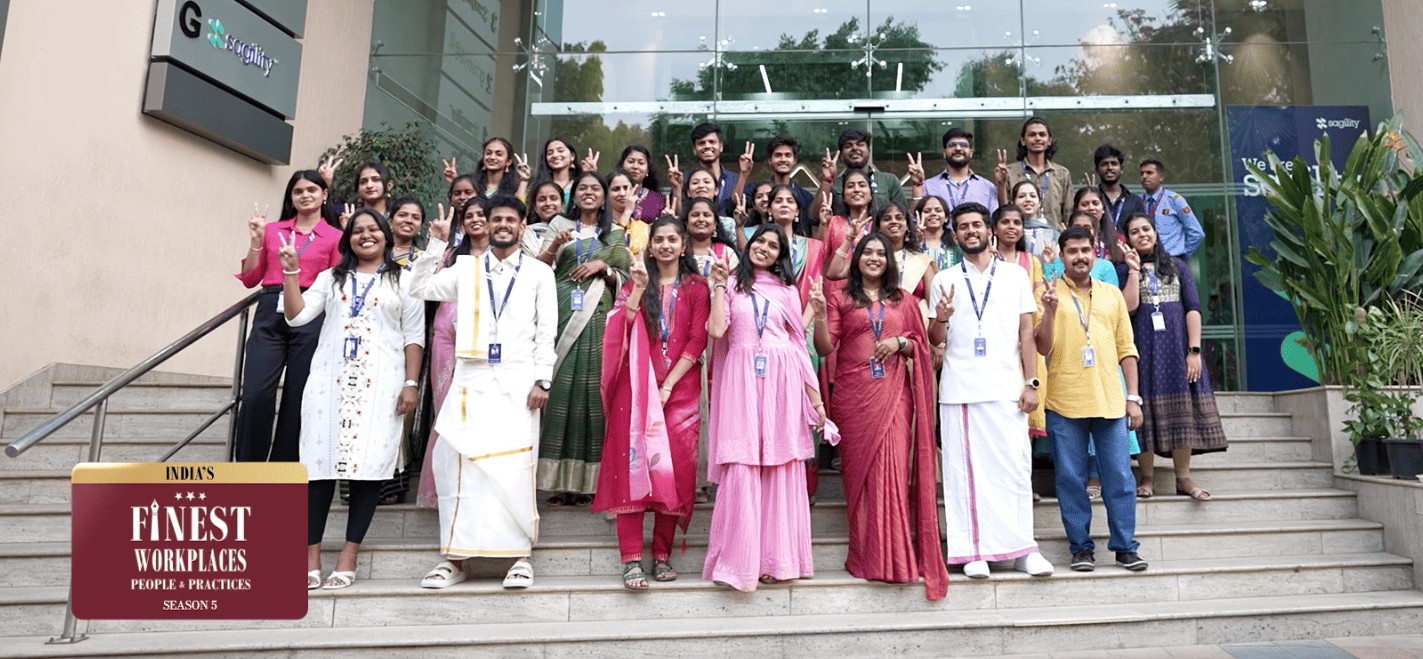
- Fig. 01
- Sagility India — home to a workforce of 18,000+ across six delivery locations, and one of India's Finest Workplaces 2026–27.
Culture as a lived experience, not a statement.
Tina Vas, EVP and CHRO at Sagility, leads the people and culture function for a workforce of 48,000-plus employees spread across five countries and multiple generations — from Gen X professionals who have been with the company for decades to Gen Z associates joining today. The challenge she describes is one that large organisations rarely solve cleanly: ensuring that the values the company espouses at the top are the same values an employee encounters on day one, in a remote delivery centre, far from headquarters.
Achieving that requires three things running in parallel: identifying the cultural levers that must hold firm across every geography and generation; ensuring that leaders at every level are active agents of those values, not just adherents to them; and maintaining a continuous listening infrastructure that catches the gap between aspiration and reality before it widens.
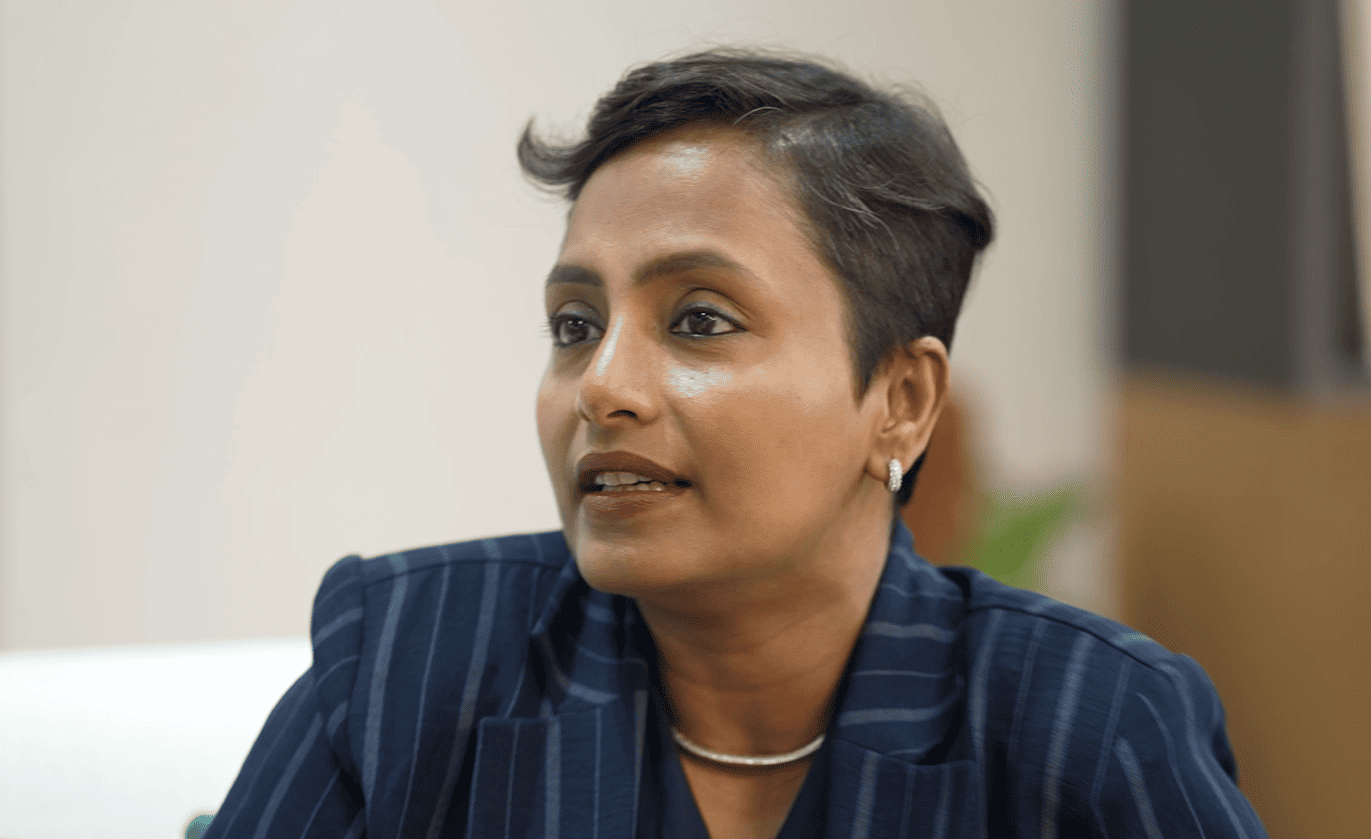
We constantly listen in. We have mechanisms across the organisation which tell us: is this actually the experience of someone walking in the door? And then we keep fine-tuning and course correcting accordingly.
- Tina Vas
- EVP & CHRO, Sagility
The career path that lived experience, not a statement.
- Growth as architecture
Sagility builds careers structurally, not opportunistically. Employees move not just upward but laterally: across functions, geographies, and account types. Trainer to quality lead. Quality lead to operations manager. Operations to transition specialist. India to international delivery. The organisation co-creates the arc with the individual, rather than waiting for a vacancy to prompt a conversation.
Mohit Saxena describes the organisational logic: “What we do is upskill employees, build on their domain, and ensure that they move not just within one function but across. That is what has helped us scale the global leadership team.” For a business that delivers end-to-end healthcare services, deep domain cannot live in a single function. It has to travel across the organisation. The internal mobility structure is therefore not an HR benefit — it is how Sagility builds the capability it needs to serve clients well.
For employees, the effect is tangible. “This gives you a sense of belongingness,” says Sep. “You are part of the company’s growth. You are part of the success story.”
24 yrs
Tenure of employees who grow across multiple functions within Sagility
61.5%
Women in the workforce, with 19% in senior leadership roles
56%
Employees who volunteer globally through structured giving-back programmes
Learning celebrated. Mistakes welcome.
In healthcare operations, the cost of a knowledge gap is not abstract — it shows up in a patient’s care pathway, in the accuracy of a clinical review, in the outcome of a payer’s adjudication decision. This gives learning at Sagility a weight it doesn’t carry in most industries. Tina Vas is explicit about the philosophy: “Learning in our organisation is celebrated, and mistakes are just treated as opportunities to correct yourself.”
The approach is structured across three dimensions. First, role capability building — ensuring that each employee has a deep understanding of the healthcare domain relevant to their function, not just the transactional skills of their immediate role. Second, coaching and shadowing — learning embedded in real work, not separated from it. Third, active opportunities to display new skills — so that growth is visible, recognised, and connected directly to the next career step.
The same philosophy extends to Sagility’s approach to technology and transformation. As Saxena describes it, the guiding framework is simple: why does a task need to exist? Can it be eliminated? Can it be automated? For tasks that still require people, how do we optimise the output? The result is a workforce that does not just execute processes — it questions them, and is encouraged to do so.
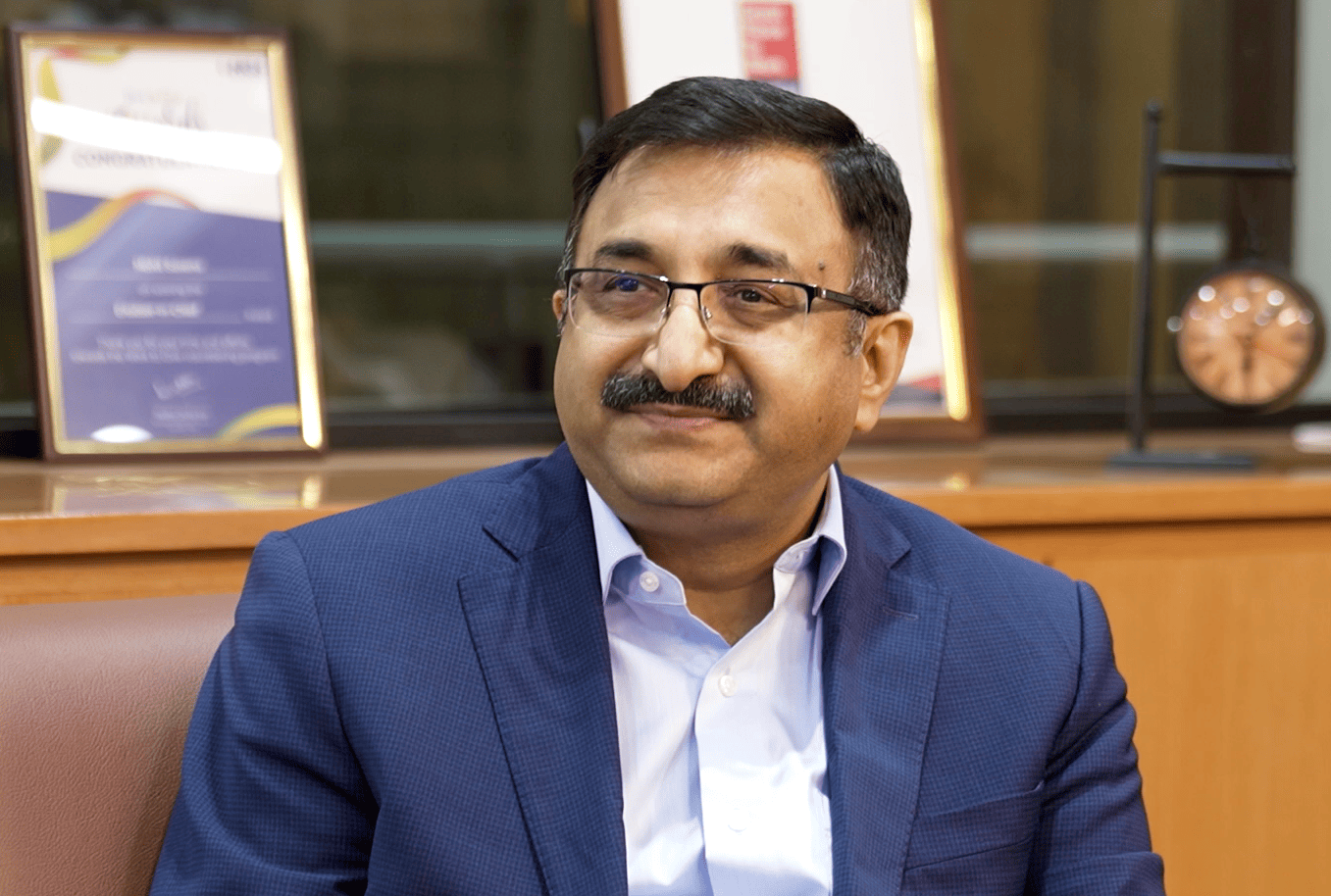
What we do is upskill employees, build on their domain, and ensure that they move not just within one function but across. That is what has helped us scale the global leadership team.
- Mohit Saxena
- EVP & Chief Delivery Officer, Sagility
Pride that comes from the work itself.
Udayan M., SVP and Head of Operations for Sagility India, oversees a unit of more than 18,000 employees across six delivery locations — a unit that has sustained double-digit growth over many years. When asked what drives that performance, he identifies four dimensions: accelerating growth through career creation, co-creating the future with clients, leading with deep domain experience, and the pride that employees carry about the impact of their work.
That last dimension is the one he returns to. “There is a huge amount of pride in what we do,” says Udayan. “The pride comes from the fact that we are impacting somebody’s life — somewhere 5,000 or 10,000 miles away. But it impacts their life.” For a workforce processing claims, conducting clinical reviews, and managing healthcare workflows on behalf of some of the largest US healthcare organisations, the stakes are real and the employees know it. That knowledge does something generic engagement programmes cannot replicate: it gives people a reason to care about their own quality of work that comes from within, not from a dashboard metric.
Udayan calls it execution excellence — and frames it not as a KPI but as a habit. “Operational excellence is not a one-time achievement. It is a habit built through continuous process and disciplined execution.”
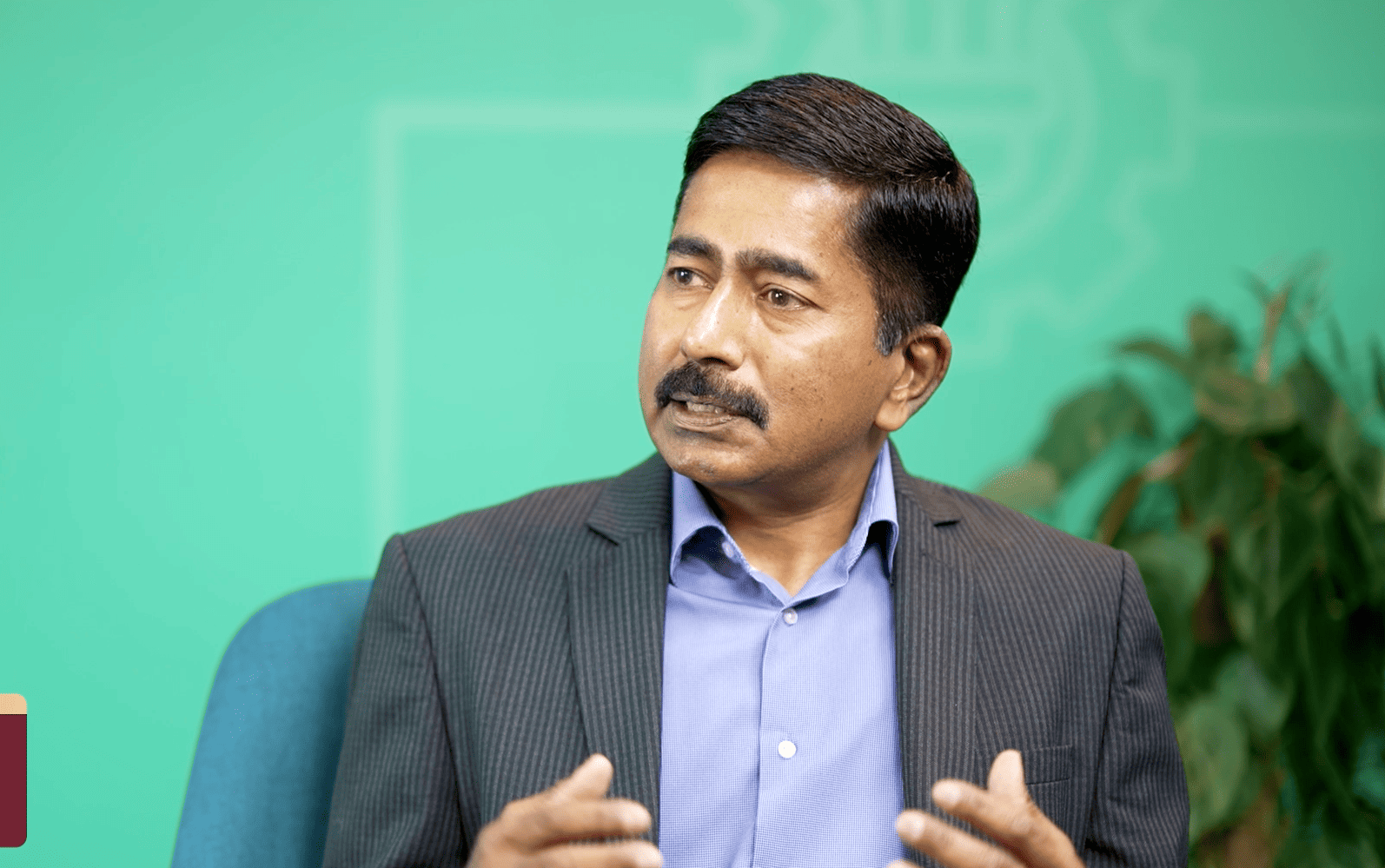
There is a huge amount of pride in what we do. The pride comes from the fact that we are impacting somebody's life — somewhere 5,000 or 10,000 miles away. But it impacts their life.
- Udayan M.
- SVP & Head of Operations, Sagility India
People practices built for every generation.
Aparna Rao Basu, SVP and Head of HR India, and Global Head of Diversity, Inclusion and CSR, holds responsibility for the people architecture that makes Sagility’s culture operational at scale. The numbers that frame her task are significant: 48,000-plus employees, 75% of whom are Gen Z; approximately 60% of the workforce operating from home; and a demographic span that runs from Gen Z associates at the start of their careers to Gen X professionals with decades of institutional knowledge.
“A lot of our people practices are curated to ensure that we are able to attract, engage, and retain talent across all of these age segments,” says Rao Basu. Curated is a deliberate word. Sagility does not run a single engagement model across all cohorts — it maintains the cultural non-negotiables while allowing room for how those values are expressed locally, generationally, and functionally.
On diversity and inclusion, the numbers reflect genuine structural commitment: 61.5% women in the workforce and 19% in senior leadership. For a Gen Z-majority workforce — a cohort that treats workplace inclusion as a baseline expectation, not a benefit — these figures matter. They signal that the pipeline is being built, not just the headline.
The community dimension runs alongside. Sagility’s CSR programmes are not peripheral to its culture — they are embedded within it. Approximately 56% of employees globally participate in structured volunteering initiatives across healthcare and education. Current programmes include providing reading glasses for individuals with presbyopia in rural areas, reaching approximately 20,000 beneficiaries in Varda, Maharashtra. “We want to be known as an organisation that doesn’t just stand for profits,” says Rao Basu. “Giving back is very strongly entrenched in the cultural ethos of this organisation. It creates a bond and creates pride for our employees.”
Our people practices are curated to ensure that we are able to attract, engage, and retain talent across all age segments.
- Aparna Rao Basu
- SVP, Head of HR India · Global Head of DEI & CSR, Sagility
The culture that people discover when they leave.
The truest measure of a workplace culture is not what employees say while they are inside it. It is what they discover when they step outside.
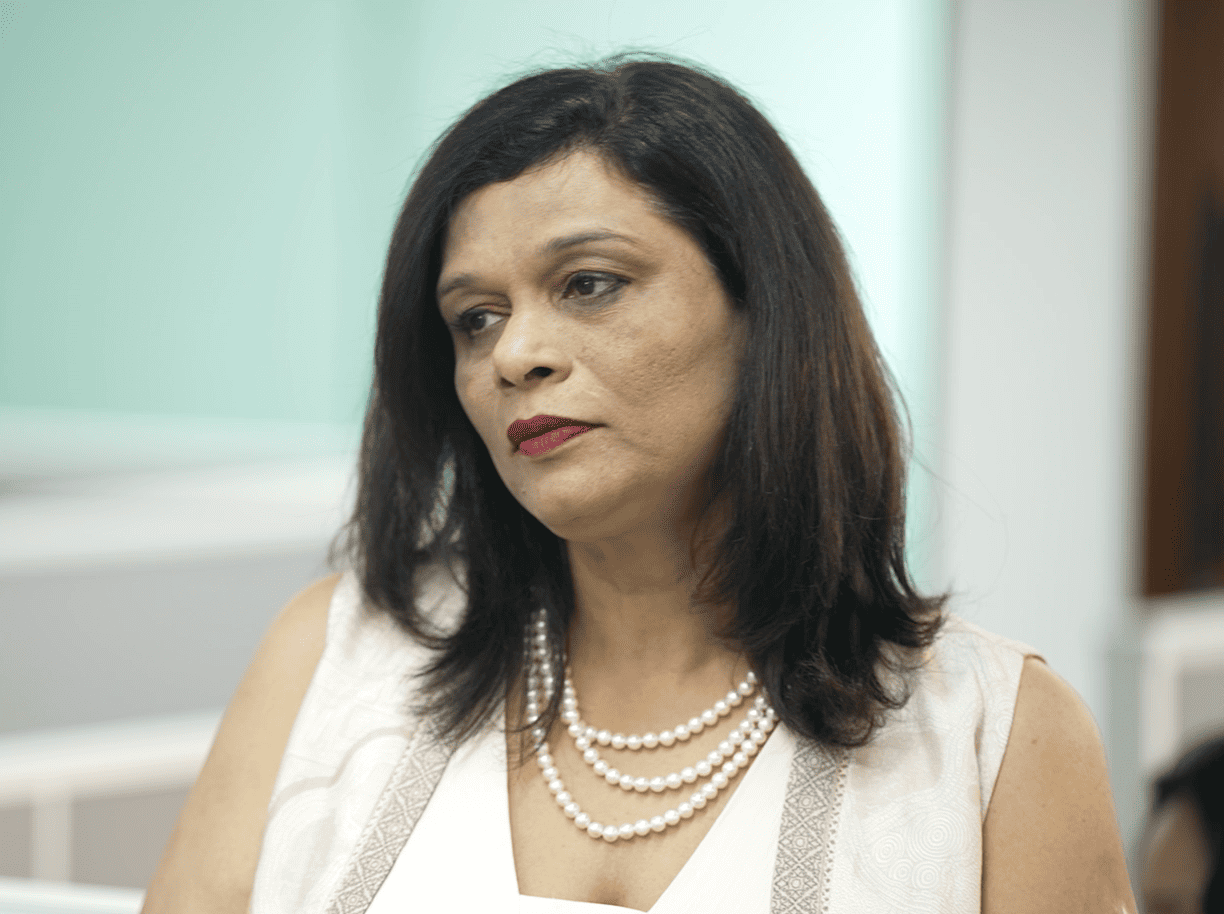
One Sagility employee joined in talent acquisition, moved into an HRBP role, then left to explore other organisations. The comparison was clarifying. “When I started comparing with other organisations, I did not see the same level of support from leaders, learning and opportunities, and collaboration which I had at Sagility.” When the opportunity to return arose, the decision required little deliberation. “It was honestly an easy decision. I consider myself privileged to be back and be part of this wonderful organisation again.”
Boomerang employees are often treated as an HR curiosity. At Sagility, they are something more concrete: a signal that the culture being described from the inside is real enough to be missed from the outside. And in a company where Sep has spent 24 years, where employees move across functions and geographies, and where the work itself carries the weight of patient impact — the conditions for that signal to fire are not incidental. They are built.
Our people practices are curated to ensure that we are able to attract, engage, and retain talent across all age segments.
A returning Sagility employee
- What we learned
One: culture at scale requires structural mechanisms, not aspirational statements — cross-functional mobility, continuous listening, and multi-generational people practices are the architecture, not the decoration. Two: in an industry where the stakes of every transaction are ultimately human, purpose that is concrete travels further than purpose that is aspirational — employees who know their work affects a patient’s life don’t need to be reminded why it matters. Three: the truest measure of a workplace is what people discover when they leave. Sagility’s boomerang employees are not a footnote. They are the organisation’s most honest performance review.
Methodology. Source: India’s Finest Workplaces interview series, June 2026. Figures drawn from Sagility leadership interviews, employee testimonials recorded on-site, and published organisational data. Workforce composition, volunteering participation rates, diversity metrics, and career mobility examples as reported by Sagility management.
- Read More
More from the library.

- White Papers
BFSI · 8,400 employees